


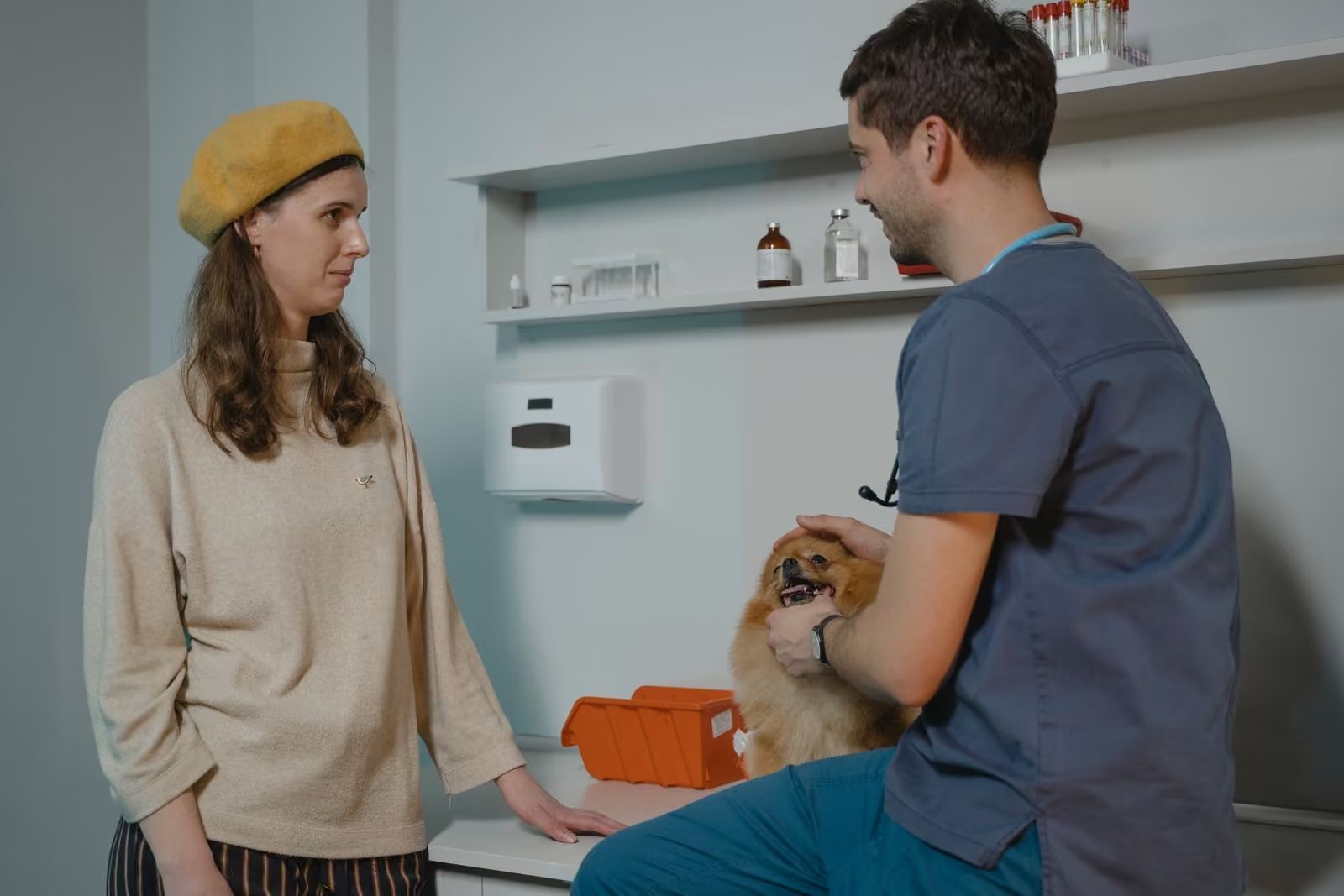
A pet owner looking for a new veterinary practice rarely starts with a recommendation anymore. They start with a search — “vet near me,” “veterinary clinic open now,” or the name of a service their animal needs. The practices that win that client are usually not the ones with the biggest advertising budget. They are the ones that show up clearly in that search, make the next step obvious, and answer the first call properly.
Here is how that path actually works, stage by stage.
The search comes first
Most new-client journeys begin on Google, and most of them begin on a phone. The owner is comparing a short list: the map results at the top, a couple of websites, and whichever practice looks easiest to reach. At this stage, a practice’s Google Business Profile does most of the talking — its categories, services, hours, photos, and reviews are what the searcher sees before they ever reach a website.
That is why local search work matters so much for clinics. SEO for veterinarians is not about tricks or rankings for their own sake. It is about making sure the practice appears, accurately and completely, for the searches its future clients actually make — by service, by neighbourhood, and by the problems that send a pet owner looking for help in the first place.
The website has one job: make the next step clear
When a searcher does click through, they are answering three questions quickly. Does this practice offer what my animal needs? Is it somewhere I can actually get to? And how do I book?
Websites lose new clients when those answers are buried — when services are described in general terms instead of by name, when the service area is vague, or when the only contact route is a phone number on a page the owner is reading at 10 p.m. A page per core service, written in the language owners use, with a clear booking or contact route on each one, is what turns a visit into an enquiry. Our veterinary marketing agency page sets out how we structure that for practices across Canada and the US.
Paid search fills the gaps while SEO builds
Search visibility compounds over time, which means a practice that is rebuilding its presence can feel invisible for a while. Paid search is the bridge: Google Ads for veterinarians puts the practice in front of owners searching right now, for the services it most wants to book, in the area it actually serves.
The discipline is in the matching. An ad for a specific service should land on the page about that service — not the homepage — and the campaign should be judged on enquiries and booked appointments, not clicks. Broad, unmatched campaigns are how practices end up paying for searches they never wanted.
The first call decides more than the ad does
The most expensive leak in veterinary marketing is not a ranking or a click. It is the call that rings out — during a busy morning, over lunch, or after close, when a worried owner is deciding where to take an animal tomorrow. That owner does not usually leave a message and wait. They call the next practice on the list.
We wrote about this pattern in the after-hours gap: the enquiry was already earned by the marketing, and lost at the answering step. Veterinary practices feel it sharply, because so many first contacts are time-sensitive. A deliberate routine for missed calls — reviewed first thing, called back before new work starts — recovers more new clients than most campaign tweaks.
What to check first
Before spending on any channel, a practice gets more from an honest look at the path it already has:
- The profile. Is the Google Business Profile complete — right categories, named services, current hours, real photos of the practice?
- The service pages. Does each core service have its own page, in the words owners search with, with a clear next step?
- The match. Do ads land on the page they promise, and are they measured on enquiries rather than clicks?
- The answering. Who owns missed calls, and how fast are they returned — including evenings and weekends?
None of these require a bigger budget. They require the existing path to stop leaking the clients the marketing already earned.
If you want that path reviewed for your practice, request a free Growth Audit and we will map where new clients are being lost first.