Get Marketing Insights First
Subscribe to receive actionable strategies, growth tips, and industry insights delivered straight to your inbox.

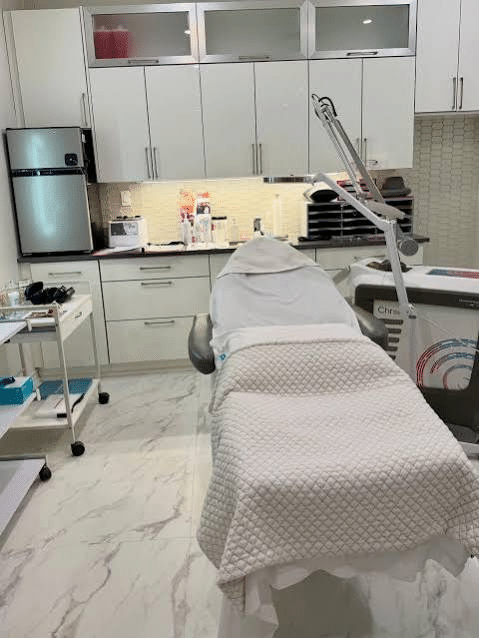
Every Ottawa med spa pays for its inquiries twice: once in ad spend or search visibility, and once in the staff time it takes to answer them. What almost no clinic measures is the third cost — the revenue that evaporates between the moment a patient submits a consultation request and the moment a human replies. Response lag is the cheapest leak to measure and the most expensive to ignore, because it destroys demand you have already paid to generate.
Most clinics think of reply speed as a courtesy. It is not. It is the highest-leverage conversion variable in the entire booking funnel, and it operates before any of your carefully designed landing pages, follow-up sequences, or consult scripts get a chance to matter. A patient who requests a Botox or laser consultation is typically contacting two or three clinics in the same evening. The clinic that replies first with a specific, useful answer does not just win that inquiry — it frequently removes the competitor from consideration entirely, because the patient stops shopping once someone competent responds.
This is why a clinic can have strong traffic, a well-designed site, and a healthy ad account, and still watch consult volume stay flat. The leak is not upstream of the form. It is downstream of it, in the inbox.
Across service industries, the pattern is consistent: a reply inside five minutes converts to a booked appointment at a multiple of the rate of a reply at one hour. Past twenty-four hours, most aesthetic inquiries are functionally dead — the patient has booked elsewhere, or the intent that drove the request has simply cooled. The decay is not linear; it is a cliff. The difference between a fifteen-minute reply and a two-hour reply is worth more than the difference between a two-hour reply and a next-day reply, which is why incremental improvements at the front of the curve pay disproportionately.
Aesthetic demand compounds this because of how the searches happen. Treatment research happens late — on phones, in the evening, often within a day or two of the patient deciding to act. An inquiry that arrives at 9pm on a Thursday is a patient in an active decision window. If your first reply lands at 9am Friday, you have spent fourteen hours letting that window close while a competitor with SMS routing answered in four minutes.
You cannot fix what you have not timestamped. The audit is simple and takes thirty days:
The median usually looks tolerable — clinics are often reassured by it. The 90th percentile is where the revenue is, because that is the inquiry that arrived on a Saturday evening, during a lunch rush, or while your coordinator was mid-appointment. A clinic with a 40-minute median and a 19-hour 90th percentile is losing roughly one inquiry in ten to near-certain abandonment, and those tend to be the highest-intent ones.
Also segment by channel. Forms, Instagram DMs, and phone voicemails usually have wildly different lag profiles, and the worst channel is often the one generating the most qualified demand.
For most Ottawa clinics, after-hours coverage is the root cause, not staff effort. A clinic that closes at five and answers at nine the next morning has a fourteen-hour structural lag on every evening inquiry — and in aesthetics, evenings are a large share of total volume. No amount of “we’ll try to respond faster” fixes a structural gap. Routing does.
Once you have your lag profile, the annual revenue at risk is a four-input calculation:
Annual Lag Loss = Monthly Inquiries × 12 × Lag-Driven Abandonment Rate × Consult-to-Treatment Rate × First-Year Patient Value
Worked example for a mid-size Ottawa clinic:
That yields 120 × 12 × 0.12 × 0.38 × $1,850 = $121,766 in inbound-attributed annual revenue exposed to lag abandonment — and recovering even a third of it is a $40,000 annual swing from a routing change, not a media budget increase.
Two cautions. First, use your own timestamps, not industry benchmarks — the point of the calculation is that it is arguable with real numbers. Second, count first-year patient value including the maintenance cycle, not the single visit, or you will understate the loss and under-fund the fix.
The fix sequence is unglamorous and fast: assign every inquiry to a named owner, acknowledge by SMS within minutes regardless of hour, and use a scripted first reply that offers two specific consult slots instead of asking the patient to find time. Specificity converts; open-ended availability does not. Most clinics can implement this in under two weeks, and the effect on the 90th percentile shows up in the first monthly re-measurement.
Response lag is one of the three leaks in our full Ottawa med spa framework, alongside review velocity and landing page friction. To see how it fits into the complete audit — and to run the numbers on your own clinic — read our master Med Spa marketing guide for Ottawa clinics.